
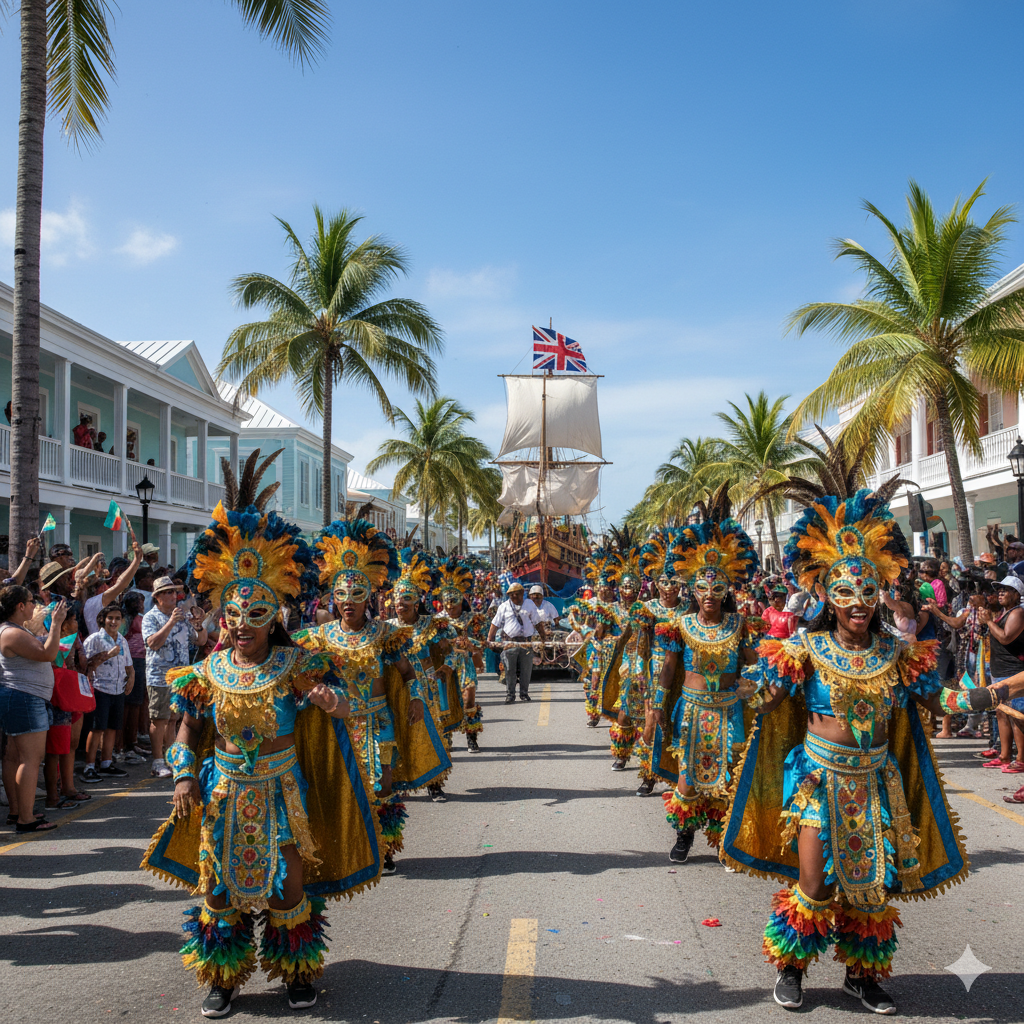
The Bahamas boasts a rich and diverse culture shaped by African, British, and Indigenous Lucayan influences. Long before European explorers set foot on the islands, the Lucayan people thrived, developing their own distinct way of life. However, in 1492, Christopher Columbus arrived, marking the beginning of European colonization. Over time, the Lucayan population was decimated, and the islands became a hub for British colonial rule. Officially declared a British colony in 1718, The Bahamas remained under British governance for over two centuries before gaining independence in 1973. Today, the country proudly celebrates its cultural heritage, blending its historical influences into a vibrant and unique national identity.
A defining aspect of Bahamian culture is Junkanoo, a lively and colorful festival that showcases the spirit and artistic talent of the islands. Rooted in African traditions, Junkanoo takes place on Boxing Day and New Year’s Day, filling the streets with pulsating drumbeats, intricate handmade costumes, and energetic dancing. The festival’s origins trace back to enslaved Africans who were given a few days off during the holiday season, using the opportunity to celebrate with music and dance. Over the centuries, Junkanoo has evolved into a national spectacle, drawing both locals and tourists eager to experience the exhilarating performances and creative displays.
Beyond Junkanoo, Bahamian culture is deeply expressed through music, dance, and storytelling. Goombay and rake-and-scrape are traditional music styles that feature the rhythmic sounds of goatskin drums, saws, and accordions, reflecting the island’s African heritage. Meanwhile, storytelling remains an important tradition, with folktales passed down through generations to preserve the wisdom and humor of Bahamian ancestors. The country’s cuisine also plays a vital role in its cultural identity, with dishes such as conch salad, rock lobster, and peas and rice offering a taste of the island’s rich culinary traditions.
Bahamian society is known for its warm hospitality and relaxed approach to life, often referred to as “island time.” This easygoing mentality is reflected in daily interactions, where people take the time to greet one another and engage in friendly conversation. The sense of community is strong, with close-knit families and neighborhoods that emphasize mutual support and shared experiences. Religion also plays a significant role in Bahamian life, with many citizens attending church regularly and incorporating faith into their daily routines.
The natural beauty of The Bahamas further enhances its cultural appeal. With its stunning turquoise waters, white sandy beaches, and lush landscapes, the islands provide a picturesque setting that inspires art, music, and literature. Tourism is a cornerstone of the economy, attracting visitors who come not only for the breathtaking scenery but also to immerse themselves in the rich cultural experiences the islands offer. Festivals, craft markets, and traditional performances ensure that both residents and tourists can engage with and appreciate Bahamian heritage.
Ultimately, The Bahamas is a nation that embraces its past while celebrating its present. The blend of African, British, and Indigenous influences has created a unique and dynamic culture that continues to thrive. Whether through its festive Junkanoo parades, flavorful cuisine, or warm hospitality, The Bahamas remains a place where history and tradition are proudly honored, making it a truly special destination.