
The journey through Pakistan often unfolds as a series of contrasts, where ancient civilisations, soaring mountain landscapes and vibrant city life reveal themselves in unexpected ways. Pakistan occupies a remarkable position at the crossroads of South Asia, Central Asia and the Middle East, creating a destination shaped by centuries of cultural exchange, trade and migration. Travellers arriving in the country quickly discover that its attractions extend far beyond the famous images of towering Himalayan peaks and historic monuments. Across deserts, valleys, coastlines and bustling urban centres, Pakistan offers a diverse collection of experiences that combine natural beauty, living heritage and everyday cultural life.
Many visitors begin their exploration in the historic city of Lahore, often regarded as the cultural heart of the country. Here, Mughal architecture dominates the landscape through landmarks such as Lahore Fort and Badshahi Mosque. The city’s old streets hum with activity as food vendors, artisans and shopkeepers continue traditions that have endured for generations. As evening falls, the atmosphere shifts once again, with illuminated monuments reflecting centuries of history against the modern rhythm of urban life.
Further south, Karachi presents a different side of Pakistan. As the country’s largest city and principal economic centre, Karachi combines coastal scenery with museums, markets and contemporary cultural spaces. Beaches along the Arabian Sea attract residents and visitors alike, while historic districts reveal layers of colonial and post-independence development. For many travellers, however, Pakistan’s greatest attraction lies in its northern regions.
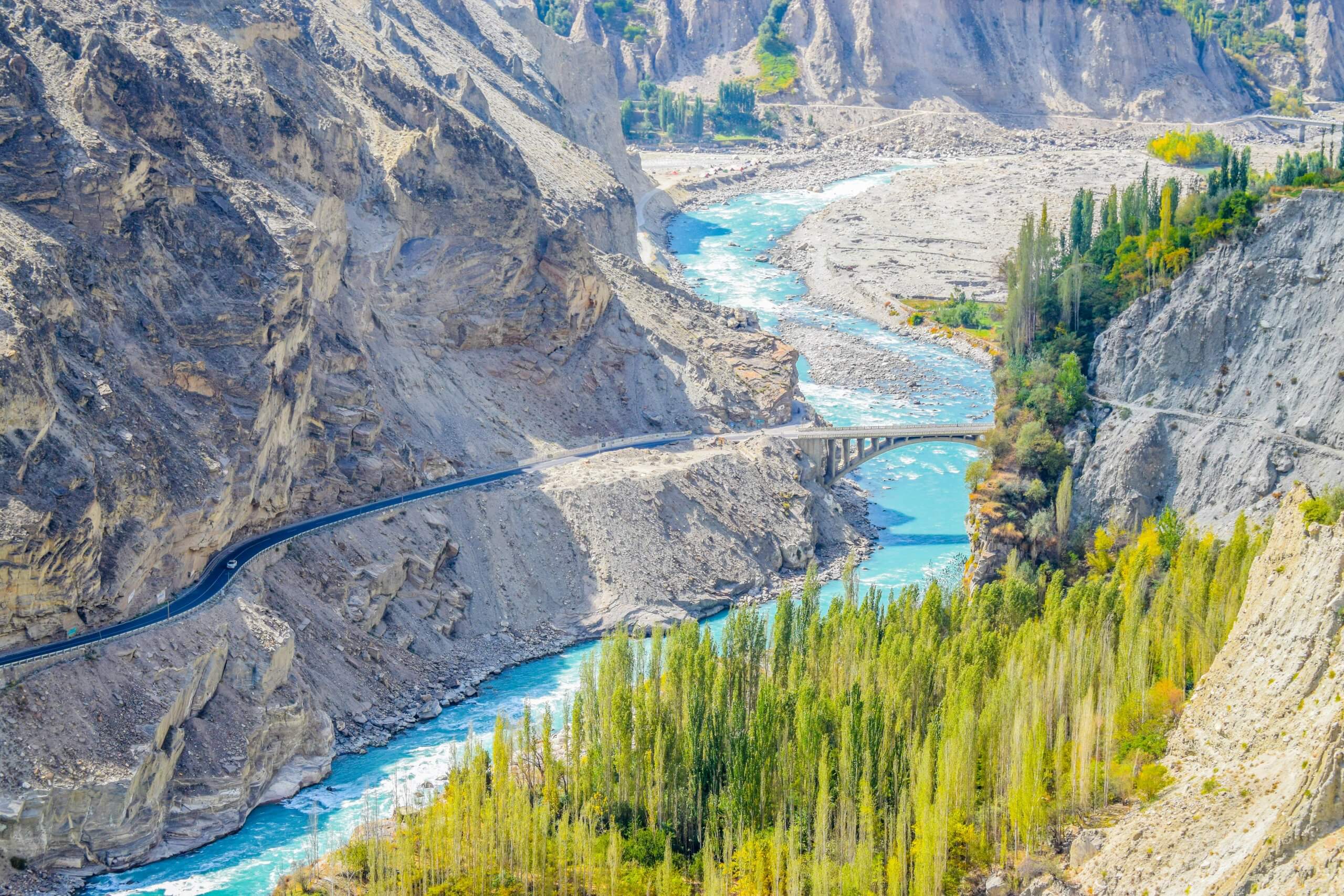
The landscapes of Gilgit-Baltistan have become increasingly recognised for their dramatic scenery. The famous Karakoram Highway winds through valleys surrounded by some of the world’s highest mountains, including peaks within the Karakoram Range. Villages such as Hunza provide access to mountain views, historic forts and local traditions that remain closely connected to the surrounding environment. Among the country’s most celebrated attractions is Baltit Fort, a centuries-old structure overlooking the Hunza Valley.
The fort serves as a reminder that these remote mountain communities were once important centres along historic trade routes connecting Asia’s great civilisations. Visitors often arrive expecting only mountain scenery and leave with a deeper appreciation for the region’s cultural heritage. Another significant destination is Mohenjo-daro, one of the most important archaeological sites in South Asia. Dating back more than four thousand years, the ancient city provides insight into the sophisticated urban planning of the Indus Valley Civilisation.
Walking among its ruins reveals a level of organisation and engineering that continues to surprise modern visitors. Yet some of Pakistan’s most rewarding experiences are found away from the country’s best-known attractions. Hidden among the mountains of northern Pakistan is the village of Ganish, one of the oldest settlements in the Hunza region. Traditional architecture, narrow pathways and historic watchtowers create a sense of continuity with the past that remains remarkably intact.
In the province of Balochistan, the unusual rock formations of Hingol National Park offer a landscape unlike any other in the country. Wind and erosion have shaped dramatic cliffs, canyons and natural sculptures that seem almost otherworldly. Despite its scale and beauty, the region remains far less visited than many of Pakistan’s northern destinations. The mountain meadows of Fairy Meadows provide another example of a place that captures travellers’ imaginations.
Located near the base of Nanga Parbat, the area combines forests, alpine pastures and panoramic views of one of the world’s highest mountains. The journey to reach the meadows is part of the experience, passing through landscapes that gradually reveal the immense scale of the surrounding peaks. An insight that surprises many visitors is how much of Pakistan’s tourism appeal revolves around living communities rather than isolated landmarks. Markets, villages and local festivals often leave impressions just as lasting as famous monuments.
The country’s attractions frequently derive their significance from the people who continue to inhabit and maintain these places rather than from their historical value alone. Further hidden gems can be found in regions such as Chitral, where valleys bordered by rugged mountains preserve distinct cultural traditions and languages. The nearby Kalash Valleys offer opportunities to learn about one of the country’s most unique cultural communities, whose traditions have survived for centuries despite geographic isolation. As travellers move across Pakistan, they often discover that the country’s appeal lies not simply in individual attractions but in the connections between them.
Ancient archaeological sites lead naturally into modern cities. Mountain landscapes reveal centuries of trade and migration. Historic monuments remain embedded within contemporary communities. These layers of history and daily life create a travel experience that continues to unfold long after the journey begins.
Commonwealth Gateway Closing Perspective Pakistan’s tourist attractions and hidden gems reveal a country of remarkable diversity, where mountains, deserts, cities and archaeological treasures coexist within a shared national story. Beyond its famous landmarks, the country’s lesser-known destinations offer opportunities to understand the cultural traditions, landscapes and communities that continue to shape modern Pakistan.
For more information, take a look at these local third-party websites: