
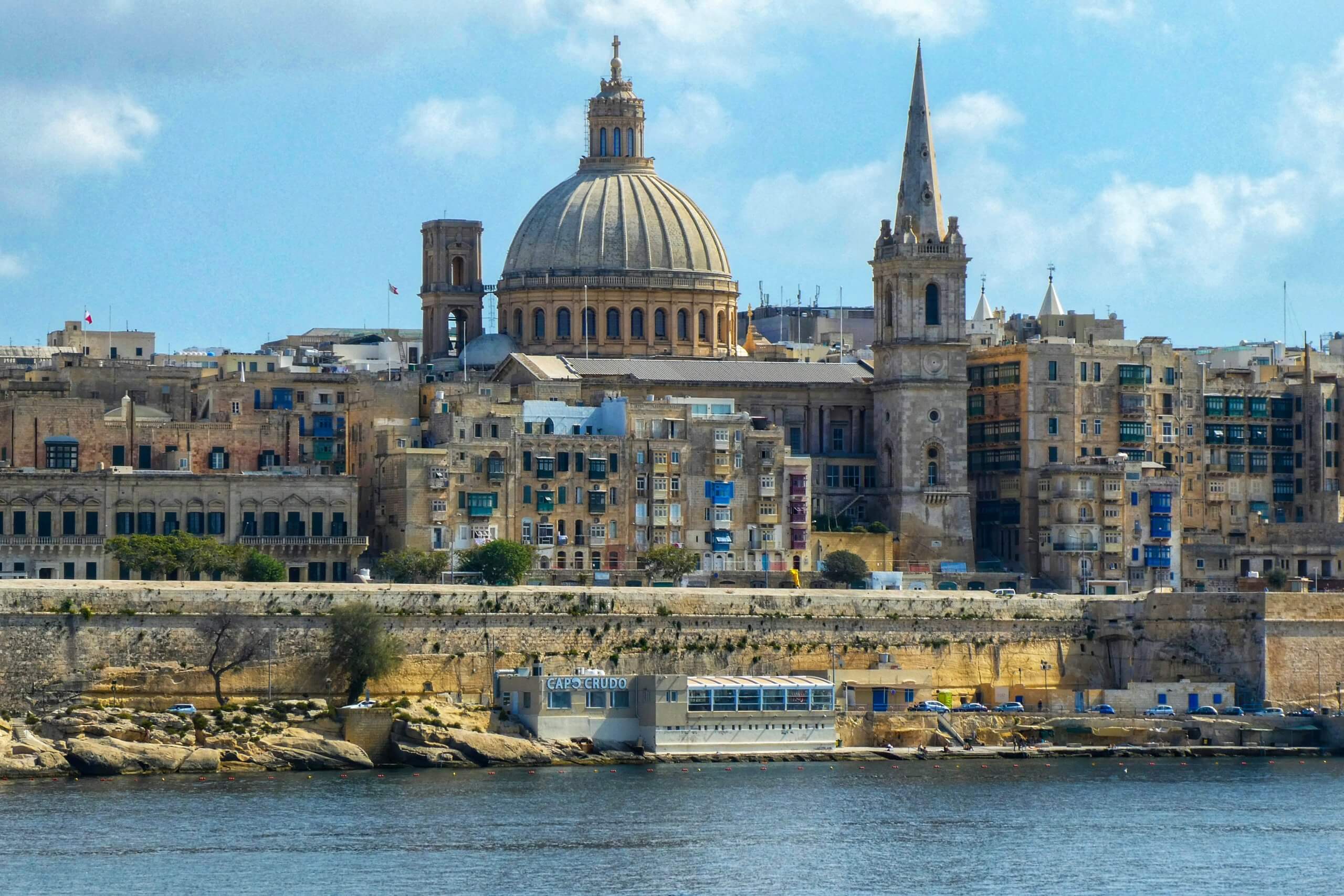
Golden limestone cities rise above sheltered harbours while church bells echo across narrow streets, revealing a Mediterranean society shaped by thousands of years of human history. Located at the centre of the Mediterranean Sea between Europe and North Africa, Malta occupies a strategic position that has attracted traders, settlers, conquerors, and pilgrims for millennia. Though modest in size, the Maltese Islands possess one of the richest historical records in Europe, reflecting an extraordinary succession of civilisations whose influence remains visible throughout contemporary life. The earliest chapters of Maltese history stretch back more than 5,000 years.
Long before the construction of the Egyptian pyramids, prehistoric communities on the islands erected monumental stone temples that continue to astonish archaeologists today. Sites such as Ġgantija, Ħaġar Qim, and Mnajdra rank among the oldest free-standing structures in the world. These remarkable achievements challenge common assumptions about early societies and reveal Malta as a centre of prehistoric innovation rather than a peripheral island settlement. The islands later attracted Phoenician traders who recognised the value of Malta’s location along important maritime routes.
Their arrival integrated Malta into extensive Mediterranean trading networks and introduced cultural influences that would shape future generations. Control subsequently passed to the Carthaginians and then the Romans, each leaving lasting marks on local society. Roman Malta became known for prosperity and strategic importance. According to Christian tradition, one of the most influential events in Maltese religious history occurred when Saint Paul was shipwrecked on the islands around AD 60.
The event remains deeply embedded in national identity and contributed significantly to the development of Christianity in Malta. Churches, monuments, and annual celebrations continue to commemorate this connection nearly two thousand years later. As centuries passed, Malta experienced successive periods of Byzantine and Arab influence. The Arab era, beginning in the ninth century, proved particularly transformative.
Agricultural techniques, irrigation systems, place names, and elements of language introduced during this period became integral parts of Maltese society. Perhaps the most enduring legacy is the Maltese language itself, which evolved from a form of Arabic while later incorporating substantial vocabulary from Italian, Sicilian, English, and other European languages. This linguistic heritage provides one of Malta’s most fascinating cultural characteristics. Maltese is the only Semitic language written entirely in the Latin alphabet and serves as a living reflection of the islands’ complex historical journey.
Conversations heard in cafés, markets, and village squares often include a blend of linguistic influences accumulated over centuries of interaction with neighbouring regions. The defining chapter of Maltese history began in 1530 when the islands were granted to the Knights of the Order of Saint John. Known commonly as the Knights Hospitaller, this military and religious order transformed Malta into one of the Mediterranean’s most formidable strongholds. Their arrival ushered in an era of architectural, artistic, and political development that continues to shape the islands’ identity.
The Great Siege of 1565 stands as one of the most significant events in Maltese history. Ottoman forces launched a major assault on Malta, seeking control of the strategically important islands. Despite overwhelming odds, the Knights and Maltese defenders successfully resisted the invasion. The victory became a defining national memory and reinforced Malta’s role as a frontier between competing powers in the Mediterranean.
In the aftermath of the siege, construction began on Valletta, the fortified capital city named after Grand Master Jean Parisot de Valette. Built according to advanced Renaissance planning principles, Valletta emerged as one of Europe’s most remarkable urban projects. Walking through its streets today reveals grand palaces, churches, bastions, and public spaces that testify to the ambitions of the Knights and the skilled artisans who realised their vision. An unexpected insight into Maltese culture is the extent to which history remains part of daily life.
Unlike countries where historic sites exist separately from modern society, Malta integrates centuries-old buildings, traditions, and rituals into contemporary urban environments. Residents pass medieval walls on their way to work, attend religious festivals rooted in centuries-old customs, and gather in squares surrounded by architecture that spans multiple eras. Religious faith remains a significant cultural force. Roman Catholicism has profoundly influenced social life, education, architecture, and community traditions.
Village festas represent some of the most visible expressions of this heritage. Throughout the summer, towns and villages celebrate patron saints through processions, fireworks, music, and communal gatherings. These events combine religious devotion with local pride and social participation, creating vibrant spectacles that unite generations. British influence added another important layer to Malta’s identity.
Following the departure of the French in the early nineteenth century, Malta became part of the British Empire. Its strategic harbour facilities made it a vital naval base and military outpost. English became widely used, educational institutions expanded, and administrative structures evolved under British governance. The Second World War brought immense hardship.
Malta’s strategic location made it a target for sustained aerial bombardment. Civilians endured severe shortages and constant attacks, yet the islands resisted. In recognition of exceptional bravery, King George VI awarded the George Cross to the entire population in 1942. Today, the George Cross remains incorporated into Malta’s national flag, symbolising collective resilience and sacrifice.
Independence was achieved in 1964, followed by the establishment of the republic in 1974. Since then, Malta has developed into a modern European state while preserving strong connections to its historical heritage. Membership in the European Union further strengthened international ties while supporting economic growth and cultural exchange. Contemporary Maltese culture reflects this layered past.
Traditional foods blend Mediterranean and North African influences. Architectural styles range from prehistoric temples to Baroque cathedrals and British colonial buildings. Daily life unfolds within communities where family relationships, local traditions, and neighbourhood identity remain important social foundations. Visitors often arrive expecting a Mediterranean island destination but leave with a deeper appreciation for Malta’s historical significance.
The islands demonstrate how geography can shape destiny. Positioned at the crossroads of continents, Malta absorbed influences from numerous civilisations while continuously developing its own distinctive character. Commonwealth Gateway Closing Perspective Malta’s culture and history reveal a society shaped by encounter, resilience, and continuity. From prehistoric temple builders to modern European citizens, generations of Maltese people have adapted to changing circumstances while preserving a strong sense of identity.
The result is a nation where ancient heritage, religious tradition, maritime history, and contemporary life exist side by side, creating one of the Mediterranean’s most distinctive cultural landscapes.
For more information, take a look at these local third-party websites: