
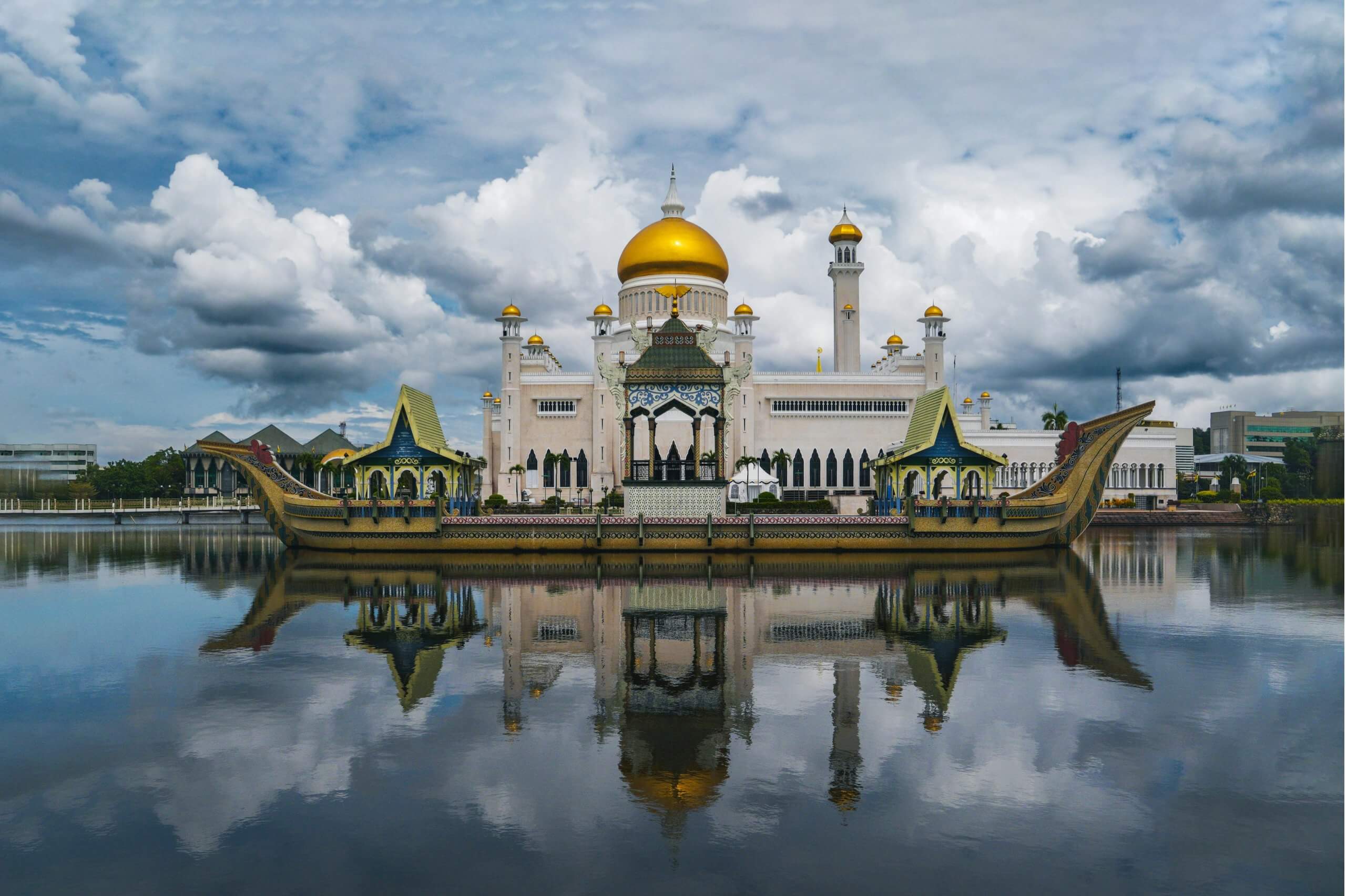
Brunei Darussalam is often overlooked by travellers moving through Southeast Asia, but that is part of what makes it distinctive. Unlike destinations built around crowded beaches, nightlife districts or fast-paced tourism, Brunei offers a quieter kind of travel experience. Its attractions are shaped by Islamic architecture, royal heritage, rainforest landscapes, river communities, museums, markets and peaceful public spaces. The country may be small, but its tourism identity is layered and calm.
Brunei is best explored slowly. It is not the kind of destination where visitors rush from one famous attraction to another. Instead, its appeal comes from atmosphere: the reflection of a golden mosque on still water, a boat crossing the Brunei River, wooden houses standing above the water in Kampong Ayer, the green silence of Temburong rainforest, and the orderliness of Bandar Seri Begawan’s civic spaces. For travellers who enjoy culture, architecture, nature and gentle discovery, Brunei has more depth than it first appears.
One of the most iconic attractions in Brunei is Sultan Omar Ali Saifuddien Mosque in Bandar Seri Begawan. It is often considered one of the most beautiful mosques in Southeast Asia, known for its golden dome, marble structure, lagoon setting and elegant symmetry. The mosque is not only a religious site but also a national symbol. Its image appears frequently in tourism materials because it represents Brunei’s Islamic identity, monarchy and architectural grace.
Another major landmark is Jame’ Asr Hassanil Bolkiah Mosque, one of the largest and most impressive mosques in the country. With its golden domes, landscaped grounds and grand scale, it reflects Brunei’s royal and religious identity. Visitors should dress modestly and follow site rules, especially around prayer times. Even from the outside, the mosque is visually striking and worth including in a city itinerary.
A very important cultural attraction is Kampong Ayer, often called the “Water Village.” Built on stilts over the Brunei River, Kampong Ayer is one of the most distinctive living heritage areas in the country. It is not simply a tourist display; it is a functioning community with homes, schools, mosques, shops and walkways. Visiting Kampong Ayer helps travellers understand Brunei’s river-based history and how water shaped settlement patterns long before modern roads and buildings. The Royal Regalia Museum is another key stop for visitors who want to understand Brunei’s monarchy.
It displays royal ceremonial objects, gifts, regalia and historical materials connected to the Sultanate. The museum helps explain how monarchy, national identity and public ceremony are connected in Brunei. It is especially useful for visitors who want context beyond sightseeing photos. For nature lovers, Ulu Temburong National Park is one of Brunei’s most important attractions.
Located in the Temburong District, it protects rainforest landscapes and offers canopy walks, river journeys and guided nature experiences. This is where visitors see a very different side of Brunei: green, humid, quiet and ecological. Temburong is often described as the “Green Jewel of Brunei,” and it shows the country’s commitment to rainforest conservation. The journey to Temburong can be part of the experience.
Travellers may pass through roads, rivers or forested areas depending on the tour arrangement. The rainforest environment is best visited with guides because trails, river routes and canopy areas require local knowledge. Visitors should prepare for humidity, insects, rain and slippery paths. Another natural attraction is Tasek Lama Recreational Park, located close to Bandar Seri Begawan.
It is a convenient green space for walking, light hiking and escaping the city. For visitors who do not have time to travel to Temburong, Tasek Lama offers a more accessible nature experience. It is popular with locals for exercise and relaxation, which makes it a good place to observe everyday Bruneian life. The Brunei River itself is an attraction.
River tours may include views of Kampong Ayer, mangroves and wildlife such as proboscis monkeys. These boat trips show how close urban Brunei is to natural river ecosystems. A short ride can move visitors from city views to mangrove silence, making the river one of the best ways to understand the country’s geography. For museum and history-focused travellers, Brunei also offers cultural institutions connected to Malay technology, Islamic heritage and national history.
Museums help visitors understand that Brunei’s identity is not only modern wealth or royal architecture, but also maritime history, craft traditions, Islamic learning and Bornean heritage. One hidden gem in Brunei is its quiet local market culture. The Gadong Night Market is a good place to experience local food, snacks and casual social life. It is not hidden in the sense that locals know it well, but it can feel like a discovery for visitors who only expect mosques and museums.
The market is ideal for trying nasi katok, satay, grilled foods, kuih and drinks in an informal setting. Another underrated experience is simply walking around the Bandar Seri Begawan waterfront during quieter hours. The city’s waterfront gives views of boats, Kampong Ayer, civic buildings and daily movement. It is especially pleasant in the early morning or late afternoon when the heat is less intense.
For visitors interested in beaches, Brunei has coastal areas such as Muara Beach and Serasa Beach. These are more local and low-key compared with famous beach destinations elsewhere in Southeast Asia. They are not usually the main reason people visit Brunei, but they offer a quieter coastal experience and a view of the country’s relationship with the South China Sea. Another lesser-known attraction is the experience of Brunei’s neighbourhood mosques, local cafés and small community spaces.
While the grand mosques attract attention, smaller everyday places reveal how religion, family and routine shape daily life. Visitors who move respectfully through these spaces may find Brunei’s quietness meaningful. Brunei’s hidden gems are often not dramatic in the usual tourist sense. They are subtle: a rain-washed mosque courtyard, a quiet river jetty, a local food stall, a forest trail, a water village walkway, or the sound of boats moving across the river.
The country rewards travellers who pay attention to atmosphere rather than spectacle. Commonwealth Gateway Closing Perspective Brunei Darussalam’s attractions reflect a small Commonwealth country where Islamic architecture, royal heritage, rainforest conservation and river-based communities remain closely connected. Its tourism appeal is calm rather than crowded, reflective rather than loud. From the golden domes of Bandar Seri Begawan to the rainforest canopy of Temburong, Brunei offers a travel experience shaped by peace, order, faith, nature and living heritage.
For more information, take a look at these local third-party websites: