
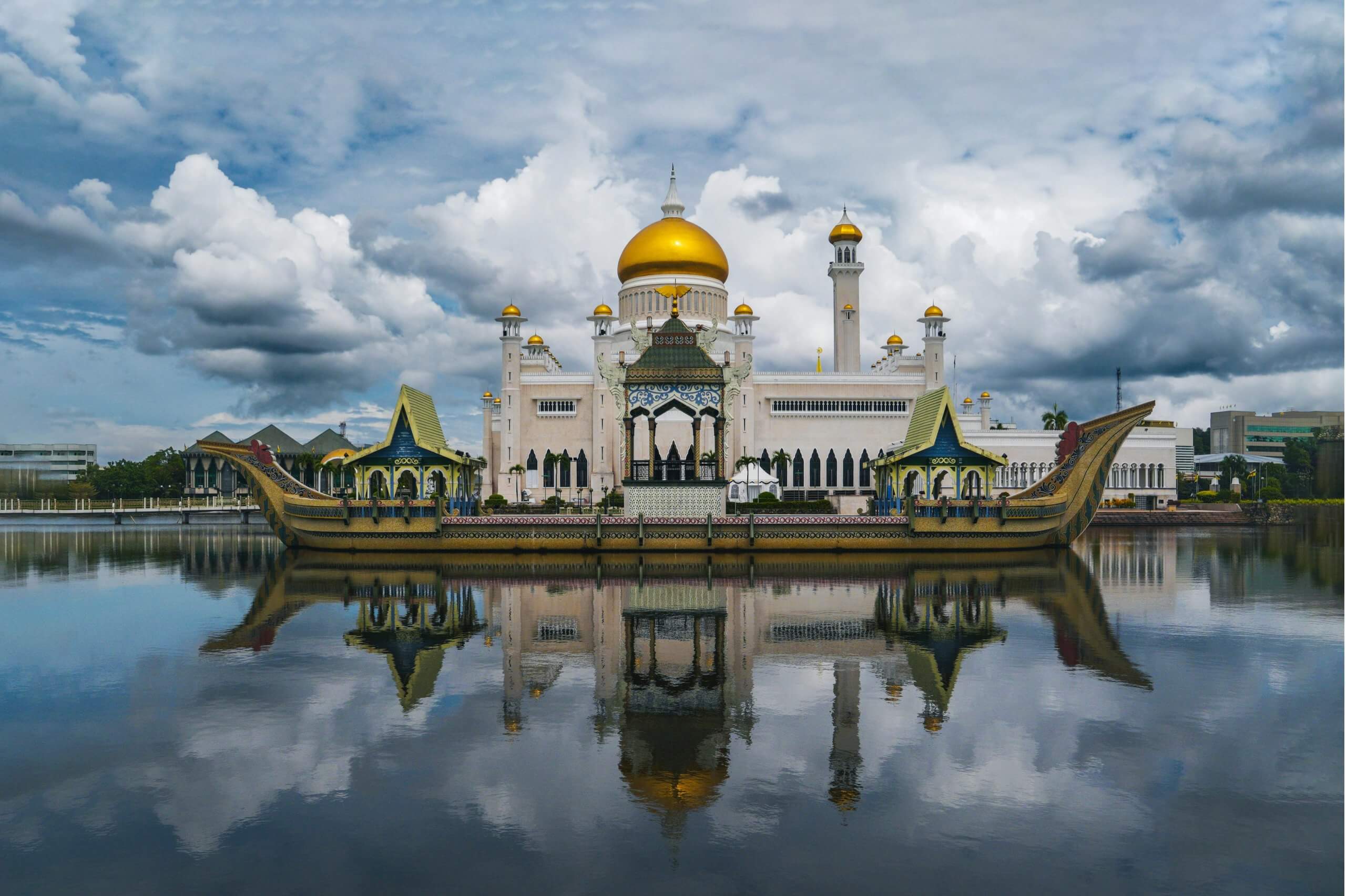
Brunei Darussalam’s transportation system reflects the country’s calm pace, compact geography, strong public order and car-oriented lifestyle. Unlike many larger Southeast Asian destinations where trains, crowded buses, motorbikes and heavy urban traffic dominate daily movement, Brunei’s transport environment is generally quieter and more structured. For visitors, this can make travel feel relaxed, but it also means that planning is important because public transport is more limited than in many neighbouring countries. Most international visitors enter Brunei through Brunei International Airport, located near Bandar Seri Begawan, the capital city.
The airport is the country’s main air gateway and connects Brunei with regional and international destinations. It is smaller and more manageable than major airports in cities such as Kuala Lumpur, Singapore or Bangkok, which gives arrivals a calmer first impression of the country. Brunei’s national carrier, Royal Brunei Airlines, is also an important part of the country’s transport identity. It connects Brunei to selected destinations in Asia, the Middle East, Australia and the United Kingdom.
For many travellers, Royal Brunei Airlines is not only a transport provider but also an introduction to Brunei’s national image: formal, modest, service-oriented and connected to the country’s Islamic identity. Within Bandar Seri Begawan, transportation is usually easiest by taxi, private car, hotel transfer, ride-hailing service or guided tour. Brunei does have public buses, but they are not always the most convenient option for tourists. Routes and schedules may be limited, and services may not run as frequently as visitors expect.
This is one of the most important things to understand before travelling: Brunei is small, but it is not always easy to explore spontaneously without arranged transport. Private vehicles are very common in Brunei. Many residents drive, and the country’s road system reflects this car-based lifestyle. Roads in and around the capital are generally calm compared with the heavy traffic of many Southeast Asian cities.
Visitors who are comfortable driving may find car rental useful, especially if they want to visit attractions outside the capital at their own pace. However, driving still requires caution. Visitors should follow local traffic rules, avoid distracted driving and be careful during rain. Brunei’s tropical climate means that sudden showers can reduce visibility and make roads slippery.
Main roads are usually manageable, but rural routes and unfamiliar areas may require more attention, especially at night. For visitors who do not want to drive, taxis and hotel-arranged transfers are practical options. Many hotels can help arrange airport pickups, city transfers and sightseeing transport. This is especially helpful for travellers visiting mosques, museums, markets, Kampong Ayer or areas outside central Bandar Seri Begawan.
Guided tours are also useful because they reduce the stress of figuring out transport independently. One of the most culturally distinctive forms of transport in Brunei is river travel. The Brunei River has shaped the country’s settlement history, and boats remain important for visiting Kampong Ayer, the famous water village. Water taxis connect river communities and offer visitors a glimpse of Brunei’s older way of life.
A short boat ride across the river can reveal how deeply Brunei’s identity is tied to waterways. Boat transport is also used for mangrove tours and river wildlife experiences. Visitors may take boat trips to see river scenery, traditional stilt houses, mangroves and wildlife such as proboscis monkeys. These journeys are both practical and cultural.
They show that transportation in Brunei is not only about moving from one place to another; it is also a way to understand the country’s river heritage. Safety is important when using river transport. Visitors should choose reputable operators, follow boat crew instructions, wear life jackets when provided and protect electronics from water. Weather can change quickly, so boat trips may be affected by rain or river conditions.
Temburong is another important transportation topic. The Temburong District is separated from the rest of Brunei by Malaysian territory, but access has improved through the Sultan Haji Omar Ali Saifuddien Bridge. This bridge connects the main part of Brunei to Temburong and has become a major national infrastructure project. It supports tourism, local movement and access to rainforest areas.
For visitors heading to Ulu Temburong National Park, transport usually involves a combination of road travel, boat travel and guided movement through forest areas. Even though road access has improved, rainforest trips are best arranged through tour operators. This is because nature-based travel requires local knowledge, safety planning and coordination. Walking is possible in some parts of Bandar Seri Begawan, especially around central landmarks, the waterfront and nearby museums.
However, Brunei’s heat and humidity can make walking tiring during the day. Sidewalks may vary depending on the area, and attractions may be more spread out than they appear on a map. Visitors should bring water, wear sun protection and avoid long walks during the hottest hours. Cycling is not a major transport method for most visitors, although some areas may be suitable for recreational cycling.
Because Brunei is car-oriented and the weather can be hot or rainy, cycling is usually better as a leisure activity than a main way of getting around. For regional travel, Brunei’s location on Borneo means land crossings into Malaysia may be relevant. Travellers combining Brunei with Malaysian Borneo destinations such as Miri, Sabah or Sarawak may use road routes depending on visa rules, border procedures and itinerary. This makes Brunei a possible stop in a wider Borneo travel route.
Transport costs in Brunei depend on travel style. Public buses are cheaper but less flexible. Taxis, private transfers and tours cost more but are easier and more reliable for visitors. Car rental can be useful for independent travellers, but it requires confidence with local roads and parking.
For families, older travellers or first-time visitors, arranged transport is usually the easiest option. It reduces waiting time and avoids confusion with limited public transport. For budget travellers, careful planning is needed because Brunei is not as backpacker-transport-friendly as destinations with dense bus, rail or ride-hailing networks. Transportation in Brunei reflects the country’s broader personality.
It is calm, orderly and relatively quiet. There are no large metro systems or chaotic transport hubs. Instead, movement is shaped by private cars, arranged transfers, quiet roads and river boats. This can make travel peaceful, but it also means visitors should plan ahead.
A practical Brunei itinerary should group attractions by area. A city day may include Sultan Omar Ali Saifuddien Mosque, the Royal Regalia Museum, Kampong Ayer and the waterfront. Another day may focus on Jame’ Asr Hassanil Bolkiah Mosque, markets and local food. A separate day can be reserved for Temburong or rainforest experiences.
Commonwealth Gateway Closing Perspective Brunei Darussalam’s transportation system reflects a small Commonwealth country shaped by private vehicles, calm roads, river heritage and improved national connectivity. While public transport is limited, visitors can move comfortably through taxis, hotel transfers, car rentals, guided tours and boat services. The most memorable transport experiences are often those that reveal Brunei’s identity: crossing the Brunei River, entering Kampong Ayer by boat or travelling toward Temburong’s rainforest landscapes.
For more information, take a look at these local third-party websites: