
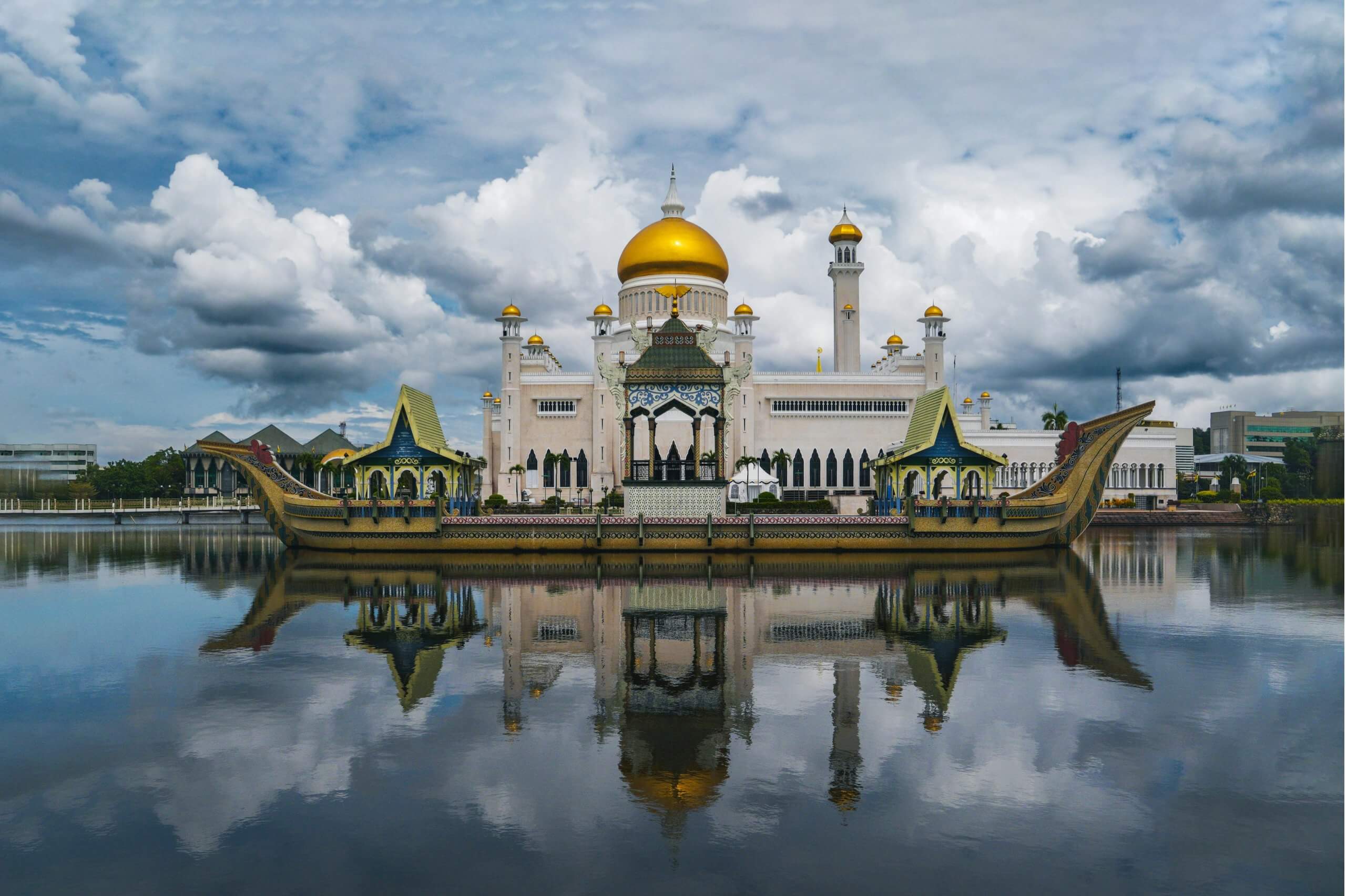
Brunei Darussalam’s money and cost environment reflects the country’s identity as a small, high-income Southeast Asian nation with a strong currency, stable public services and a quieter tourism scene than many neighbouring destinations. For travellers, Brunei can feel more expensive than some backpacker-friendly countries in Southeast Asia, but it is not necessarily a luxury-only destination. Costs depend heavily on travel style, accommodation choices, transport planning and how much a visitor relies on taxis or private transfers. The official currency is the Brunei dollar, usually written as BND or B$.
The Brunei dollar is one of the strongest currencies in Southeast Asia and is interchangeable at par with the Singapore dollar under a currency agreement. This means that Singapore dollars are commonly accepted in Brunei, although visitors should still expect change to be given in Brunei dollars. For travellers coming from countries with weaker currencies, Brunei may feel more expensive than nearby Malaysia, Indonesia or Thailand. Money use in Brunei is generally straightforward.
Credit and debit cards are accepted in many hotels, malls, larger restaurants and established businesses. However, cash is still useful for smaller vendors, markets, taxis, local eateries and informal purchases. The U.S. travel advisory notes that many establishments accept credit cards, but travellers should be prepared to pay cash at smaller businesses, taxis and local vendors; ATMs are available and generally accept international cards, though fees may apply. For visitors, the most important budgeting point is that Brunei’s attractions are often not very expensive, but transport and accommodation can raise the total cost.
Many cultural and city experiences are affordable or free, such as mosque exteriors, waterfront walks, markets and some public spaces. However, if a traveller depends on taxis, private drivers or guided tours, daily spending can increase quickly. Accommodation is one of the biggest cost categories. Brunei has hotels, serviced apartments, guesthouses and some budget options, but it does not have the same large backpacker infrastructure found in places like Thailand or Vietnam.
Budget travellers may find affordable stays, but choices can be more limited. Mid-range hotels are often the most practical option for visitors who want comfort, location and reliable transport access. Food can be affordable if travellers eat locally. Simple meals such as nasi katok, noodles, rice dishes, satay, market snacks and local drinks can be budget-friendly.
Night markets and casual eateries are useful for keeping costs low while still experiencing local cuisine. Eating in hotel restaurants or international-style cafés will cost more. Transport costs depend on planning. Public buses are cheaper but may be limited in schedule and convenience.
Taxis, private transfers and guided tours cost more but save time. Because Brunei is car-oriented, visitors without a rental car should budget for transport carefully. A cheap hotel far from attractions may become less affordable if taxi costs add up. For nature activities, costs vary.
A simple city visit can be affordable, but trips to Temburong, rainforest experiences, river tours or guided excursions may require a larger budget. These experiences often include transport, guides, boat rides or park access, so they cost more than self-guided city sightseeing. A budget traveller in Brunei can reduce costs by staying in modest accommodation, eating local food, using buses where possible, walking short distances during cooler hours and focusing on free or low-cost attractions. However, this requires patience because public transport may not always match tourist schedules.
A mid-range traveller will likely have the smoothest experience. This budget allows for a comfortable hotel, local meals, occasional cafés, taxis or transfers, and one or two organised tours. For many visitors, Brunei works best as a short stay of two to four days, which keeps total costs manageable while still covering the main highlights. Luxury travel in Brunei is possible through higher-end hotels, private tours, comfortable transfers and premium dining.
However, Brunei’s luxury scene is quieter and less nightlife-focused than some regional destinations. Luxury here often means comfort, privacy, space, service and calm rather than entertainment-heavy tourism. Shopping costs in Brunei vary. Malls sell international goods, clothing, electronics and imported products, which may not always be cheap.
Local souvenirs, snacks and market items may be more affordable. Visitors should remember that Brunei is not mainly known as a bargain-shopping destination. Its value lies more in cultural calm, Islamic architecture, river heritage and nature access. Tipping is not usually as central in Brunei as in some countries.
Service charges may already be included in hotels or restaurants. Visitors can tip for excellent service if they wish, especially for guides or drivers, but it is not always expected in casual settings. Budgeting should also consider Brunei’s cultural context. Since alcohol is not sold publicly in Brunei, nightlife spending is generally lower than in destinations where bars and clubs are a major expense.
This can make Brunei feel calmer and less commercially touristy. For some travellers, this reduces costs; for others, it changes the type of trip they should expect. For Filipino travellers or visitors from lower-cost countries, Brunei may feel moderately expensive because the Brunei dollar is strong. It is wise to check exchange rates before travelling, set a daily budget and carry a mix of card and cash.
Small bills are useful for markets, snacks and local transport. Overall, Brunei is best described as a moderate-cost destination by Southeast Asian standards. It is not as cheap as many neighbouring countries, but it can be affordable with local food, short stays and careful transport planning. The key is to budget realistically: Brunei’s calm, safety, cleanliness and order often come with slightly higher costs.
Commonwealth Gateway Closing Perspective Brunei Darussalam’s money and cost environment reflects a small, stable and high-income Commonwealth country with a strong currency and calm tourism style. Visitors should expect Brunei to be more expensive than some Southeast Asian neighbours, but still manageable with local food, modest accommodation and careful transport planning. The country’s best value is found not in bargain tourism, but in peaceful city exploration, river heritage, Islamic architecture, rainforest access and everyday local dining.
For more information, take a look at these local third-party websites: