
Brunei Darussalam is best visited with careful preparation, modest expectations, respectful conduct and a willingness to experience a quieter side of Borneo where rainforest, river life, Islamic architecture and calm urban spaces shape the journey. Visiting Brunei begins with understanding the country’s pace. It is not a destination built around crowded nightlife, hurried sightseeing or loud commercial tourism. Its appeal is more measured.
The visitor arrives in a small, orderly country where the capital feels calm, the roads are generally organised, the mosques rise with polished grandeur, and the rainforest remains close enough to shape the national atmosphere. To visit Brunei well, travellers should plan not only where to go, but how to move respectfully through a society shaped by Malay culture, Islamic values, public order and environmental awareness. Most international visitors arrive through Bandar Seri Begawan, the capital and main gateway to the country. Brunei International Airport is the primary air entry point, and the capital is the natural base for first-time travellers.
From here, visitors can reach major mosques, museums, markets, the waterfront, Kampong Ayer and connections to rainforest excursions. The official Brunei Tourism site provides traveller essentials, including visa information, customs and borders, accommodation, transport and useful advice, making it a strong starting point for planning. Before travelling, visitors should check passport and visa requirements. Brunei Tourism’s travel checklist advises travellers to ensure that passports are valid for at least six months from the date of entry and to check whether a visa is required before arrival.
Visa rules vary by nationality, length of stay and purpose of visit, so official immigration and tourism resources should be checked before booking. Arrival preparation should also include the required entry documentation. Current international travel guidance notes that travellers arriving in Brunei by air, land or sea must complete E-Arrival Card registration approval before arrival, separate from visa requirements. This makes pre-arrival organisation important, even for visitors who do not need a visa.
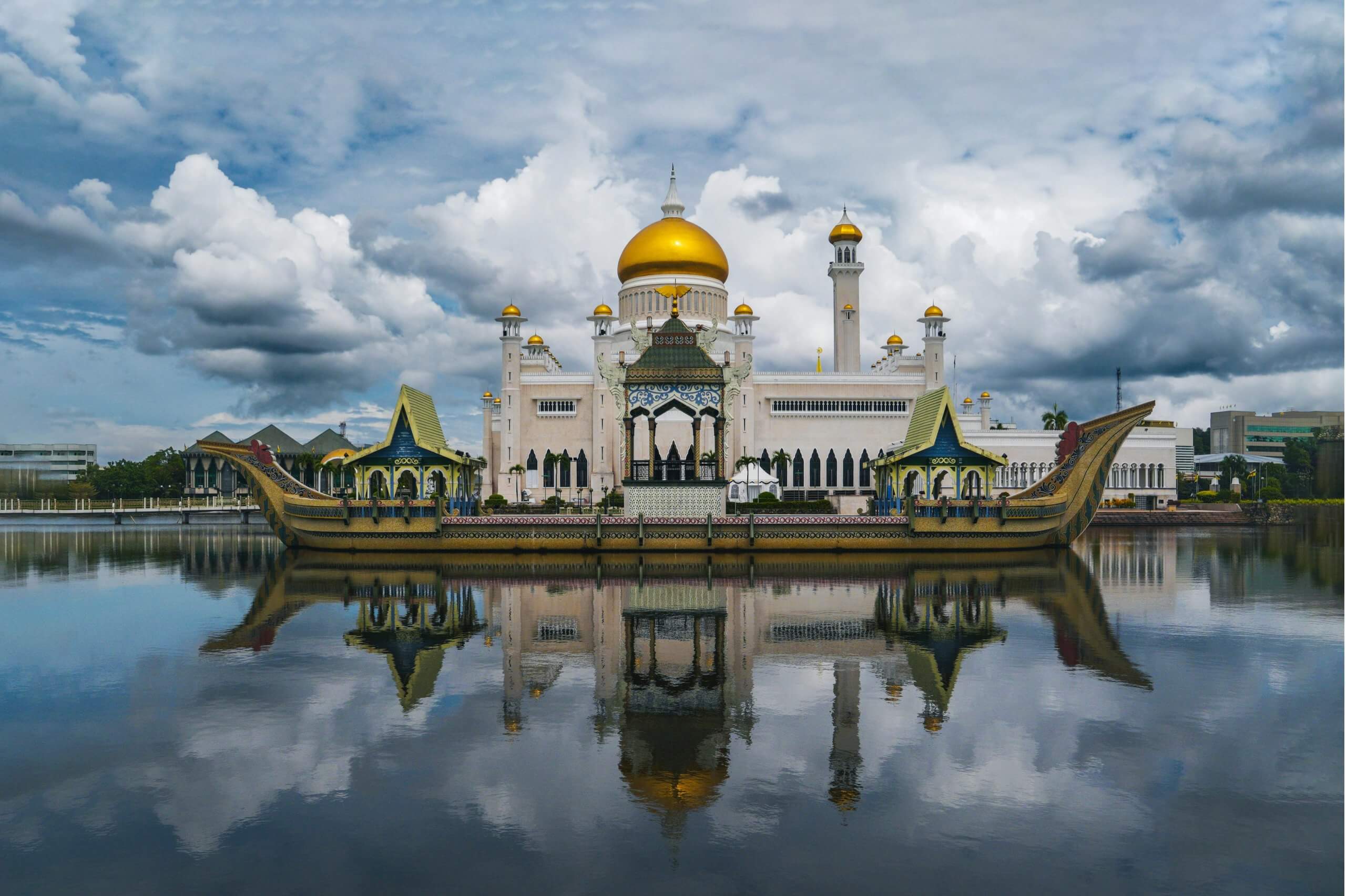
Once in Brunei, the most practical way to begin is with Bandar Seri Begawan. The capital is compact enough for a short stay, but it rewards slow observation. Omar Ali Saifuddien Mosque is one of the country’s most recognisable landmarks, standing near the city centre with its golden dome, marble surfaces and lagoon setting. Jame’ Asr Hassanil Bolkiah Mosque, larger and more ceremonial in scale, offers another view of Brunei’s Islamic architecture.
Visitors should dress modestly, follow entry rules, remove shoes where required and remember that mosques are active places of worship rather than only visual attractions. Kampong Ayer is essential to understanding Brunei. Often described as a water village, it is more accurately a living river community with homes, schools, mosques, walkways and boat routes. Visitors can reach it by water taxi from the capital’s waterfront, but it should be approached with respect.
This is not an open-air museum. It is a residential community, and people’s homes and privacy matter. A guided visit can help travellers understand the settlement’s history, structure and daily life without treating it as a spectacle. For travellers interested in culture and history, Brunei’s museums and heritage sites add context.
The Royal Regalia Museum helps visitors understand monarchy, ceremony and national identity. Local markets and food areas show a more everyday side of the country, especially in the evening when families gather and food stalls become active. These places are useful for travellers who want to understand Brunei beyond its formal landmarks. Nature-based travel is another major reason to visit.
Ulu Temburong National Park is one of Brunei’s strongest environmental experiences, known for rainforest, river journeys, canopy views and dense tropical atmosphere. Visiting Temburong usually requires planning through operators or organised arrangements, as access involves river transport and local logistics. Travellers should prepare for humidity, rain, insects, wet paths and early starts. Light clothing, rain protection, secure footwear and insect repellent are useful.
The insight shift in visiting Brunei comes when travellers realise that the country’s quietness is not a lack of things to do. It is part of the experience. Brunei is not trying to overwhelm visitors. It asks them to slow down, notice the river, listen to the call to prayer, walk through clean public spaces, observe family life in markets and understand how rainforest and religion both shape national identity.
Getting around Brunei is easiest with taxis, ride-hailing where available, hotel transport, private drivers or organised tours. Public transport exists but may not be as convenient for visitors with limited time. For short stays, basing oneself in Bandar Seri Begawan and arranging specific excursions is usually more practical than trying to move independently across many areas. Visitors should also understand local customs before arrival.
Brunei is a Muslim-majority country, and modest dress is important in public spaces, especially religious sites and formal areas. Public behaviour should be calm and respectful. Alcohol is not openly sold, and public drinking is not part of local culture. Travellers should also avoid careless comments about religion, monarchy or national institutions.
Weather should shape the itinerary. Brunei is warm and humid throughout the year, with rain possible in any month. Morning is often best for walking, photography and outdoor sightseeing. Midday can be hot and tiring, making museums, cafés or indoor visits more comfortable.
Rainforest and river trips should be planned with local weather updates in mind. A short Brunei visit can be meaningful in two to three days, especially if focused on Bandar Seri Begawan, Kampong Ayer, major mosques, markets and one nature excursion. A longer stay allows more time for Temburong, coastal areas, museums, food exploration and slower cultural observation. Brunei is not a destination that needs to be rushed.
Its value often appears in the pauses between major sights. Ultimately, visiting Brunei Darussalam is about preparation, respect and attentiveness. Travellers who check entry rules, dress appropriately, plan transport carefully and approach local communities with courtesy will find a country that is calm but distinctive. Brunei’s strongest experiences are not only its landmarks, but its atmosphere: river light, rainforest air, mosque courtyards, evening markets and the quiet confidence of a society shaped by continuity.
Commonwealth Gateway Closing Perspective Brunei Darussalam is best visited through thoughtful planning and respectful travel habits. Official tourism and immigration resources should be checked before departure, especially for passport validity, visa requirements and E-Arrival Card registration. Once in the country, visitors can explore Bandar Seri Begawan, Kampong Ayer, major mosques, museums, markets and rainforest areas such as Ulu Temburong. The most rewarding visit is calm, culturally aware and flexible, allowing Brunei’s quieter details to become part of the journey.
For more information, take a look at these local third-party websites: