
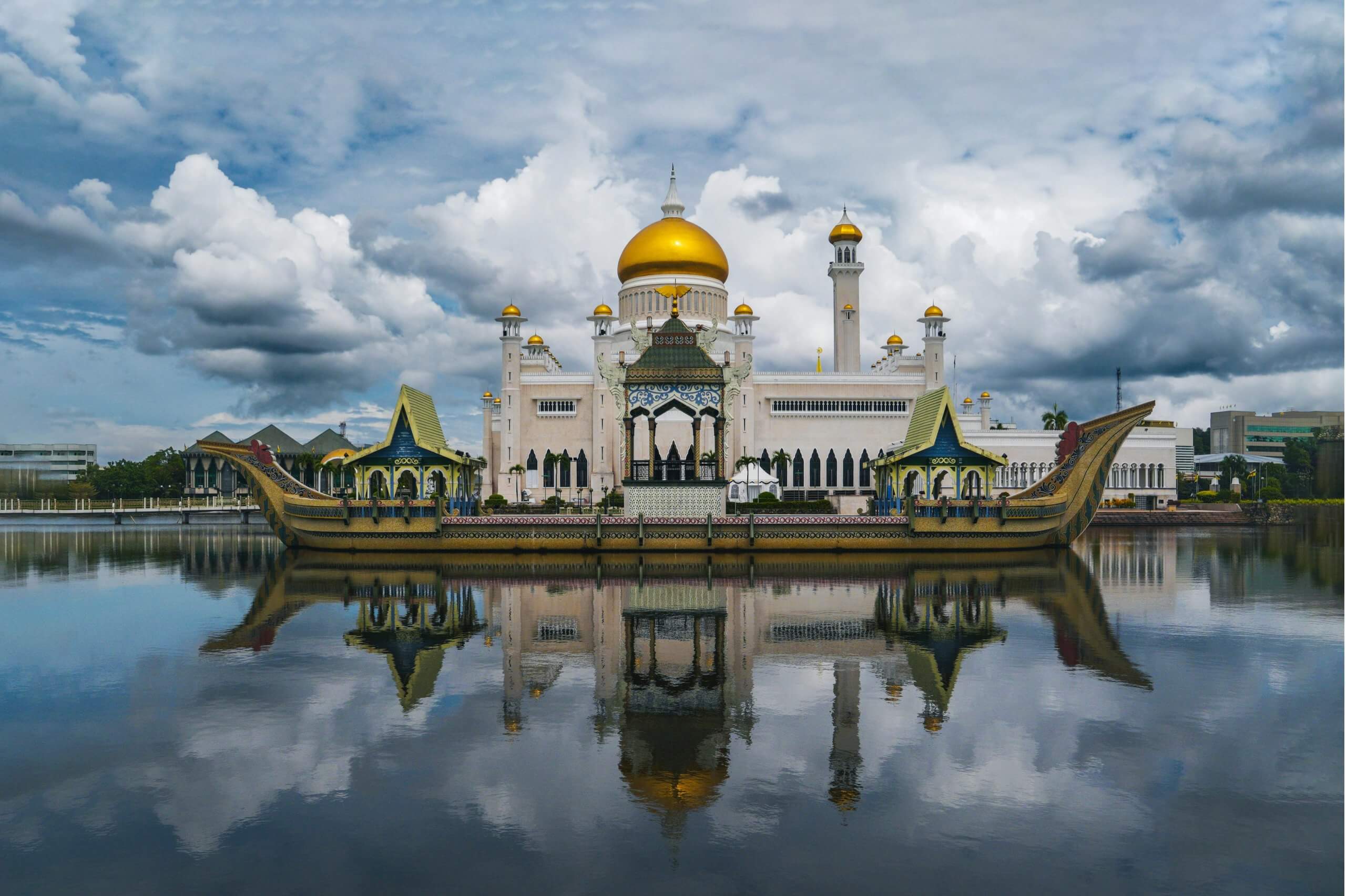
Brunei Darussalam’s shopping and souvenir culture is quiet, graceful and deeply connected to Malay tradition, Islamic identity, river life, rainforest landscapes and a national way of living that values refinement over excess. Shopping in Brunei does not immediately announce itself with noise, urgency or spectacle. It unfolds more gently. In Bandar Seri Begawan, the capital city, the experience often begins in clean shopping complexes, shaded streets, small boutiques, local markets and riverside areas where daily life moves at a measured pace.
Unlike destinations where shopping is presented as a major tourist performance, Brunei’s retail culture feels more closely connected to ordinary life. It is shaped by family routines, religious values, traditional dress, local food, craft heritage and a sense of order that reflects the country’s wider social rhythm. The visitor who expects crowded souvenir streets or aggressive selling may be surprised. Brunei’s shopping atmosphere is generally calm.
Shopkeepers are usually polite rather than forceful, and many retail spaces are designed for practical needs rather than tourist display. This gives shopping in Brunei a different kind of value. It becomes less about searching for dramatic bargains and more about noticing the small details of national identity: the texture of woven cloth, the shape of a traditional cap, the quiet beauty of Islamic design, the scent of local snacks, the careful arrangement of goods in a night market, and the way modern malls sit comfortably beside older cultural habits. In Bandar Seri Begawan, shopping centres such as those in Gadong and Kiulap represent the modern side of Bruneian retail life.
These areas contain supermarkets, clothing shops, cafés, bookstores, electronics stores, pharmacies and family restaurants. They are not only places for visitors to buy necessities; they are also social spaces where residents gather, eat, browse and spend time together. The atmosphere is usually orderly and relaxed. Families move through the malls in the evening, students gather after school, and visitors can observe the everyday comfort of urban Brunei.
Yet the most meaningful souvenirs are often found beyond ordinary commercial goods. Brunei’s cultural identity is strongly reflected in textiles, traditional clothing, religiously inspired decorative items, metalwork, woodcraft and local food products. These items may not always appear in large quantities, but they carry strong cultural meaning. A souvenir from Brunei is often most valuable when it reflects the country’s restraint, elegance and continuity.
One of the most significant souvenirs is kain tenunan, Brunei’s traditional woven cloth. This textile is closely associated with ceremony, status and national identity. It may be worn during weddings, official occasions, cultural events and formal gatherings. The cloth often features intricate patterns and a polished appearance, showing the patience and skill required in traditional weaving.
For visitors, kain tenunan is not simply a fabric purchase. It is a way of bringing home a piece of Brunei’s ceremonial world, where clothing communicates respect, heritage and social meaning. The colours and patterns of Bruneian textiles often feel formal and dignified. They may include gold, deep blue, green, red, purple or other rich tones, depending on design and purpose.
Some pieces are suitable for display, while others may be used in clothing or accessories. Even a small textile item can carry the atmosphere of Brunei’s cultural life: quiet, precise and carefully maintained. Another meaningful item is the songkok, a traditional cap worn by men in Brunei and other parts of the Malay world. In Brunei, the songkok is commonly associated with formal dress, religious occasions and national ceremonies.
It is often worn with traditional Malay clothing and is part of the visual identity of public life. For visitors, buying a songkok can offer insight into how clothing functions as a sign of respect and belonging. It is not merely an accessory; it is part of a cultural language. Islamic decorative items are also common in Brunei’s shopping culture.
These may include calligraphy-inspired artwork, prayer items, framed designs, modest fashion, decorative ornaments and books related to religion and culture. Because Islam plays a central role in Brunei’s national identity, these objects should be approached with respect. Visitors should be mindful when buying items containing sacred text or religious imagery, ensuring they are handled appropriately and not treated as casual decoration. Markets offer another important layer of shopping in Brunei.
Local markets reveal the country’s everyday life more clearly than malls. They may sell fruits, vegetables, fish, cooked food, household items, clothing, snacks and small local products. The atmosphere can be especially appealing in the evening, when the air cools slightly, food stalls begin to glow under artificial lights, and families arrive to buy dinner or browse casually. The sounds are gentle but active: conversations, cooking, plastic bags rustling, vendors greeting customers, and the soft movement of people passing through narrow spaces.
Food souvenirs are worth considering in Brunei, especially for travellers who want something practical and connected to local taste. These may include packaged snacks, biscuits, sauces, coffee, tea, dried goods, sweets or regional food products. Brunei’s food culture is influenced by Malay, Bornean and wider Southeast Asian traditions, so edible souvenirs often reflect familiar regional flavours with local character. However, travellers should always check customs rules before bringing food products into another country.
Souvenir shopping in Brunei may also include brassware, small ornaments, woven baskets, wooden items and locally designed accessories. Some objects reflect Malay decorative traditions, while others are inspired by the natural environment. Brunei’s rainforests, rivers and water villages provide a strong visual background to the country’s identity, even when they are not directly represented in every souvenir. Kampong Ayer, the famous water village of Bandar Seri Begawan, adds another dimension to how visitors understand Brunei’s material culture.
Although it is not simply a shopping destination, it helps explain the country’s relationship with water, wood, mobility and community. Souvenirs connected to river life, traditional houses, boats or local daily living may carry deeper meaning when seen against this setting. The visitor begins to understand that Brunei is not only a land of mosques and malls, but also of waterways, stilt houses and long-standing settlement patterns. The insight shift in Brunei’s shopping culture comes when one realises that the country’s souvenirs are not designed to overwhelm the visitor.
They are not loud, chaotic or heavily commercialised. Their value lies in cultural appropriateness. A woven cloth, a songkok, a small calligraphy piece or a packet of local snacks may seem simple at first, but each object reflects a society where identity is expressed through modesty, continuity and respect. This makes shopping in Brunei feel different from shopping in many larger Southeast Asian destinations.
There may be fewer tourist markets and fewer dramatic displays, but there is also less pressure. The visitor has space to observe. The act of buying becomes slower. One begins to notice how objects belong to a wider cultural setting: clothing worn at ceremonies, food shared with family, decorative patterns shaped by faith, and crafts connected to national memory.
Responsible shopping is especially important in Brunei because the country is closely associated with rainforest conservation and environmental protection. Visitors should avoid buying products made from protected wildlife, illegal animal parts, rare woods or restricted natural materials. Souvenirs should support cultural appreciation without damaging the natural environment. Ethical purchases are those that respect both Brunei’s communities and its landscapes.
Payment practices are generally straightforward. Cards are widely accepted in malls, hotels and larger shops, while cash is useful in markets, small stalls and local food areas. Prices in formal shops are usually fixed. In market settings, bargaining may occur in some cases, but it should remain polite and moderate.
Brunei is not a place where aggressive bargaining feels appropriate. Respectful interaction matters. For travellers looking for meaningful souvenirs, the best choices are often those that feel rooted in place. Kain tenunan, songkok, modest fashion, Islamic decorative items, local snacks, woven goods, brassware and small craft objects can all represent Brunei in thoughtful ways.
These items do not need to be extravagant. Their strength lies in their connection to culture, faith, family and tradition. Shopping in Brunei also reveals something about the country’s modern identity. It is wealthy but not flashy in the way many visitors might expect.
Its malls are comfortable, but its cultural objects remain important. Its markets are modest, but they carry daily life. Its souvenirs are often quiet, but they speak clearly when understood in context. Ultimately, Brunei Darussalam’s shopping and souvenir culture is best approached with patience.
The visitor who moves slowly will notice more: the sheen of woven cloth, the careful shape of a songkok, the glow of market lights after sunset, the orderliness of a mall, the scent of grilled food, the calm tone of conversation, and the way tradition continues to sit naturally within modern life. Shopping here is not only about what can be bought. It is about recognising how a small object can carry the atmosphere of a country that values dignity, faith and cultural continuity. Commonwealth Gateway Closing Perspective Brunei Darussalam’s shopping and souvenir culture reflects a nation where modern comfort, Malay heritage, Islamic values and environmental awareness exist side by side.
Its most meaningful purchases are not defined by spectacle or abundance, but by cultural depth and quiet refinement. Traditional textiles, songkok, modest fashion, Islamic decorative pieces, local food products and handmade crafts offer visitors a thoughtful way to remember the country. In Brunei, shopping becomes a calm encounter with identity: measured, respectful and closely tied to the rhythms of everyday life.
For more information, take a look at these local third-party websites: