
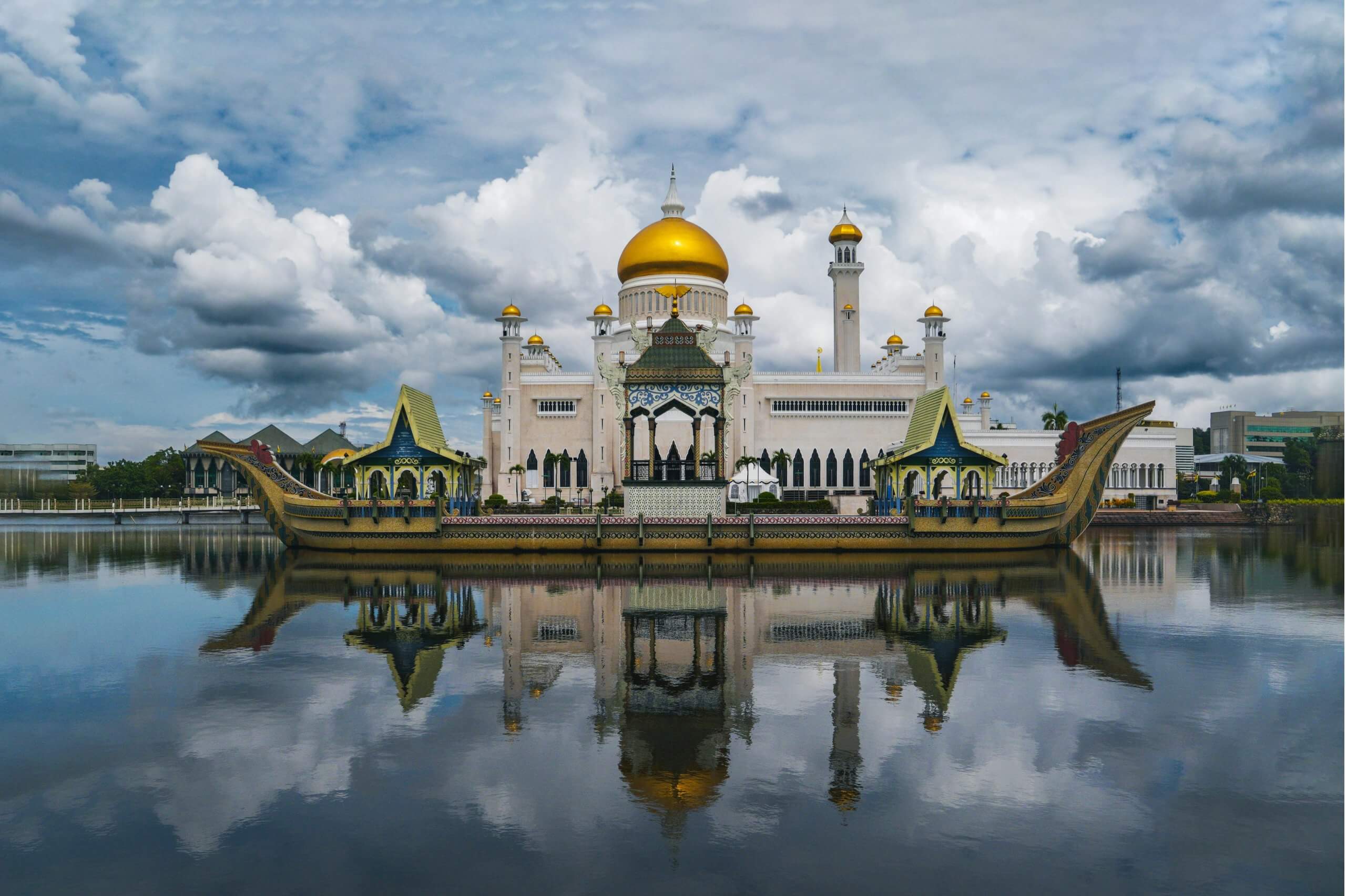
Brunei Darussalam, a small yet affluent sultanate on the island of Borneo, is a nation steeped in history, culture, and Islamic traditions. Despite its modest size, Brunei has played a significant role in regional politics and trade for centuries. Its history dates back over 1,500 years, influenced by Indian and Chinese traders before Islam became the dominant religion in the 14th century. Under Sultan Bolkiah’s reign (1485-1524), Brunei reached the height of its power, controlling large parts of Borneo and even extending influence to the Philippines. This period marked the sultanate’s golden age, with thriving trade networks and a strong maritime presence.
As global powers expanded into Southeast Asia, Brunei faced challenges from European colonialists and regional rivalries. To maintain stability, it became a British protectorate in 1888, a status that ensured security while allowing the ruling Sultanate to retain governance. Over the next century, Brunei modernized its administration and infrastructure while preserving its monarchy and Islamic identity. The nation achieved full independence in 1984, led by Sultan Hassanal Bolkiah, who continues to reign today as one of the world’s longest-serving monarchs. Since independence, Brunei has leveraged its vast oil and gas reserves to develop a prosperous economy, providing its citizens with free healthcare, education, and a high standard of living.
Brunei’s cultural landscape is shaped by its Islamic heritage and Malay customs, which are deeply ingrained in everyday life. The country adheres to Islamic law (Syariah), and religious values influence governance, social norms, and legal practices. Traditional royal customs remain a cornerstone of Bruneian society, with the monarchy playing a central role in national identity and governance. Despite modernization, Brunei has retained a deep respect for its traditions, reflected in its architecture, festivals, and arts.
Throughout the year, Brunei hosts a variety of cultural and national celebrations that highlight its rich heritage. One of the most significant is Hari Raya Aidilfitri, marking the end of Ramadan with festive gatherings, prayers, and grand feasts. His Majesty’s Birthday, celebrated on July 15, is another important occasion, featuring royal parades, cultural performances, and public festivities. National Day on February 23 commemorates Brunei’s independence with patriotic displays, parades, and traditional performances. These events provide a glimpse into Brunei’s vibrant traditions, where music, dance, and artistic expressions play an integral role.
Among Brunei’s most cherished cultural arts are the Zapin dance, Hadrah drumming, and Gulingtangan music, each reflecting the nation’s deep-rooted traditions. The Zapin dance, with its graceful movements and Islamic influences, is a highlight of many celebrations. Hadrah drumming, often performed at royal and religious events, showcases the rhythmic energy of Bruneian music. Gulingtangan, a traditional percussion ensemble, adds a melodic charm to ceremonies and performances, keeping Brunei’s musical heritage alive.
Brunei’s unique blend of history, culture, and Islamic values makes it a fascinating nation where tradition and modernity coexist. With its well-preserved heritage, deep-rooted customs, and commitment to national unity, Brunei continues to stand as a symbol of resilience and cultural pride in Southeast Asia.