
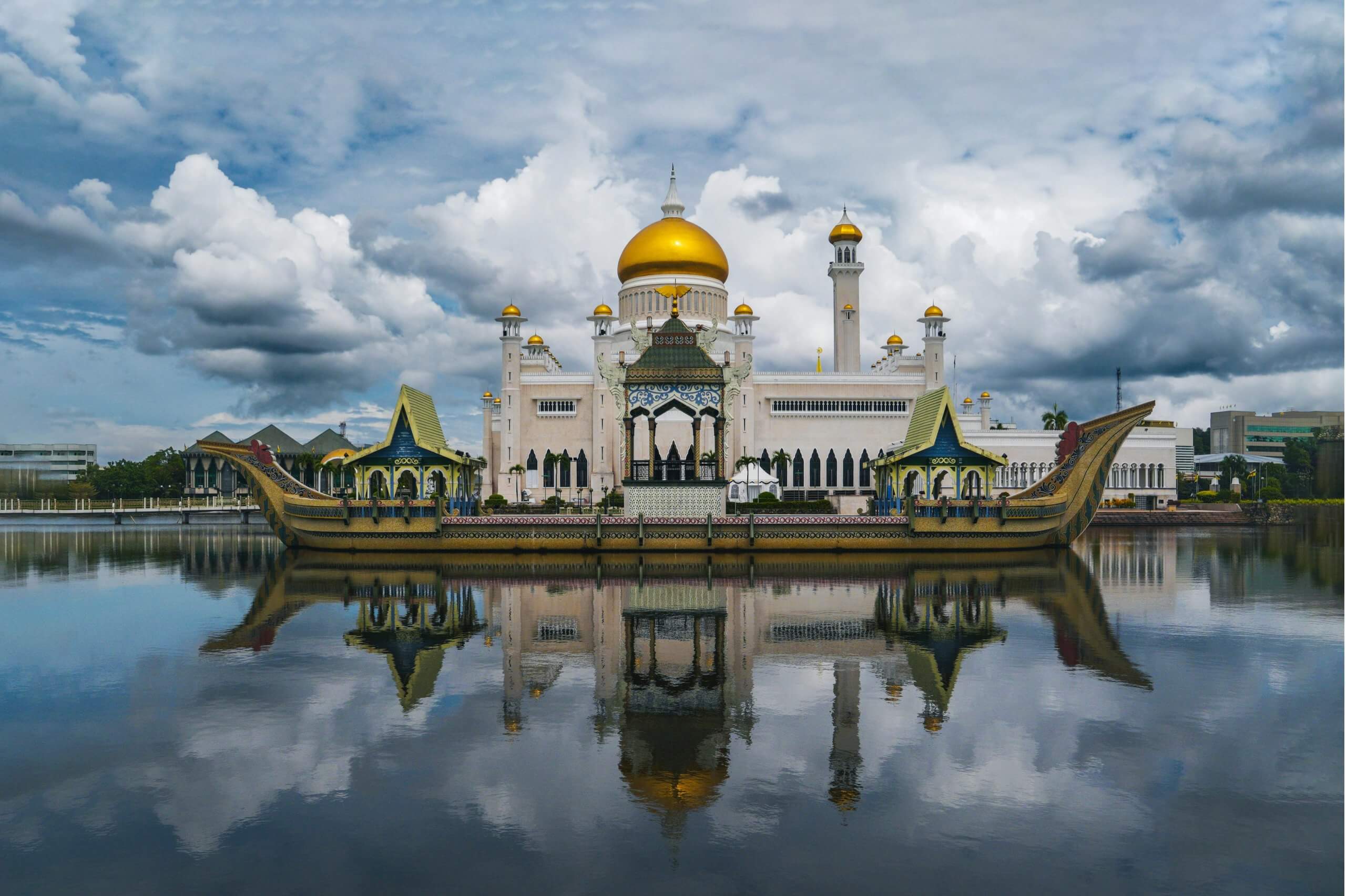
Brunei Darussalam’s social and environmental issues are shaped by a quiet but important tension between prosperity, tradition, rainforest protection, oil dependency, climate risk and the changing expectations of a modern society. Brunei is often viewed through images of calm streets, golden mosque domes, organised public spaces, rainforest landscapes and the historic water village of Kampong Ayer. At first glance, the country may appear peaceful and highly stable, and in many ways it is. It has strong public services, a small population, significant natural resources and a national identity deeply shaped by Malay Islamic Monarchy.
Yet beneath this stability, Brunei faces a set of social and environmental questions that are increasingly important for its future. One of the most significant social issues in Brunei is economic diversification. For decades, the country’s wealth has been strongly connected to oil and gas. These resources have supported public services, infrastructure, education, healthcare and a generally high standard of living.
However, dependence on oil and gas also creates long-term uncertainty. As global energy systems change and countries move towards cleaner energy, Brunei must continue preparing for a future where oil and gas may no longer provide the same level of security. This issue affects more than the economy. It also affects young people, employment and national development.
Brunei’s younger generation is growing up in a world shaped by technology, global communication, digital work, entrepreneurship and changing career expectations. Many young people may want opportunities in creative industries, tourism, education, business, information technology, research, environmental management and international fields. Creating these opportunities is important so that future generations can build careers beyond the traditional energy sector and public employment. Education plays a central role in this transition.
Brunei has invested in schooling and higher education, but the challenge is to ensure that skills match future needs. Digital literacy, innovation, environmental knowledge, business skills and technical training are increasingly important. The country’s future depends not only on having educated citizens, but on preparing them for a more diversified economy. Another social issue is the balance between tradition and modern life.
Brunei’s national identity is strongly shaped by Malay Islamic Monarchy, which influences values, governance, education, social behaviour and public life. For many people, this provides continuity, stability and a clear sense of belonging. At the same time, modern technology, social media, overseas education and global culture expose younger generations to different ideas and lifestyles. Brunei’s challenge is to maintain cultural identity while allowing society to adapt to changing realities.
Kampong Ayer is one of the clearest examples of this balance between heritage and modern needs. The water village is one of Brunei’s most important cultural landscapes, representing centuries of river-based settlement, community life and traditional architecture. However, it is also a living residential area, not just a heritage image. Residents need safe housing, sanitation, transport, education, healthcare access and modern services.
Preserving Kampong Ayer therefore requires more than protecting its appearance; it requires supporting the people who live there. Social welfare is another important part of Brunei’s national life. The country has strong public support systems compared with many places, particularly in education and healthcare. However, even strong systems must continue adapting.
Ageing populations, youth employment, housing needs, public health, mental wellbeing, disability inclusion and family support are all issues that require long-term attention. In a small country, social challenges may appear less visible, but they still affect everyday life. Environmental issues are equally important. Brunei is one of the most forested countries in Southeast Asia, and its rainforests are among its greatest natural assets.
These forests support biodiversity, regulate water systems, protect soil, store carbon and provide a powerful sense of national identity. Areas such as Ulu Temburong show the importance of rainforest conservation, where dense canopy, river systems, insects, birds, trees and humid air create a living environment that feels far removed from urban life. The challenge is to protect these forests while still allowing development. Roads, housing, infrastructure, industry and urban expansion can place pressure on land and ecosystems.
Because Brunei is small, land-use decisions are especially important. A single development project can affect drainage, wildlife habitats, river systems and nearby communities. Careful planning is essential to prevent environmental damage. Climate change is another serious issue.
Brunei is vulnerable to rising temperatures, heavier rainfall, flooding, coastal erosion and changes in weather patterns. Low-lying and coastal areas may face increasing risks over time. Urban flooding can affect roads, homes and public services, while coastal change may affect communities and infrastructure near the sea. These changes may not always happen suddenly, but they gradually shape the country’s future.
Waste management is also becoming more important. As consumption increases, so does the amount of plastic, packaging, household waste and landfill pressure. In a small country, waste disposal must be carefully managed because land is limited and pollution can affect rivers, coastal waters and neighbourhoods. Recycling, public awareness, reduced plastic use and better waste systems are important parts of environmental responsibility.
Water management is closely connected to this issue. Brunei’s rivers are central to its history, settlement and environment. The Brunei River, in particular, is tied to Kampong Ayer and the capital’s identity. Protecting rivers from pollution, sedimentation and waste is essential for public health, biodiversity and heritage.
River conservation is not only an environmental issue; it is also a cultural one. The insight shift comes when Brunei is understood not only as a peaceful and wealthy country, but as a small state making careful choices under quiet pressure. Its challenges are not always loud or highly visible. They appear in questions about youth employment, oil dependency, rainforest protection, flooding, waste management, heritage preservation and climate resilience.
Brunei’s future depends on how well it connects these issues. Tourism also has a role to play. Brunei’s tourism identity is closely linked to rainforest, Islamic architecture, river heritage and cultural calm. If tourism is managed responsibly, it can support conservation, local pride and cultural education.
However, tourism must be developed carefully so that sensitive environments and communities are not placed under pressure. Brunei has the advantage of being able to develop tourism gradually rather than reacting to overtourism after damage has already occurred. Ultimately, Brunei Darussalam’s social and environmental issues are about balance. The country must balance oil wealth with diversification, tradition with modern expectations, development with conservation, heritage with liveable communities, and national stability with future readiness.
Its strongest advantage is that many of these challenges can still be managed through careful planning, education and responsible governance. Commonwealth Gateway Closing Perspective Brunei Darussalam’s social and environmental issues reflect the responsibilities of a small, resource-rich country with strong traditions and valuable natural landscapes. Its future depends on protecting rainforest and river ecosystems, preparing for climate change, reducing dependence on oil and gas, supporting youth opportunity, improving waste management and preserving heritage communities such as Kampong Ayer. The country’s path forward is likely to be strongest when development remains careful, inclusive and environmentally aware.
For more information, take a look at these local third-party websites: