
Brunei Darussalam’s culture and history are deeply connected to monarchy, Islam, Malay identity, river life, maritime trade and the rainforest landscape of northern Borneo. Although Brunei is small in land area and population, its historical identity is much larger than its modern borders suggest. It was once the centre of an influential Malay sultanate, connected to regional trade, Islamic learning and political networks across Borneo and the wider Malay world. The word Darussalam means “Abode of Peace,” and this phrase strongly reflects how Brunei presents itself today: calm, orderly, religiously grounded and rooted in tradition.
Brunei’s national identity is shaped by the idea of continuity. The monarchy, Islamic faith, Malay customs and respect for social harmony are not treated as separate parts of society; they are woven together into the country’s public life. Brunei’s culture is strongly influenced by the old Malay world. Official information from Brunei’s UN mission explains that Brunei’s culture comes mainly from the Malay civilisation of the Malay Archipelago, while also being shaped by animist, Hindu, Islamic and Western influences across different historical periods.
This layered cultural history is important because it shows that Brunei did not develop in isolation. It absorbed and adapted influences through trade, religion, migration and contact with neighbouring societies. Before Islam became central to Brunei’s identity, the region was influenced by earlier belief systems and cultural exchanges connected to the wider island world of Southeast Asia. Animist traditions, Hindu-Buddhist influences and local Bornean customs helped shape early social life.
Over time, Islam became the defining force in Brunei’s political and cultural development, especially through the Sultanate. The Brunei Sultanate became historically significant as a maritime power. At different points in history, Brunei’s influence extended beyond its current borders, reaching parts of Borneo and nearby island territories. Its location along maritime routes helped connect it to trade, diplomacy and Islamic networks.
The sea and rivers were not barriers; they were pathways. The Brunei River is especially important to the country’s history. Long before modern roads and administrative districts, river systems shaped settlement, trade and communication. Kampong Ayer, the historic water village in Bandar Seri Begawan, is one of the clearest living reminders of this river-based past.
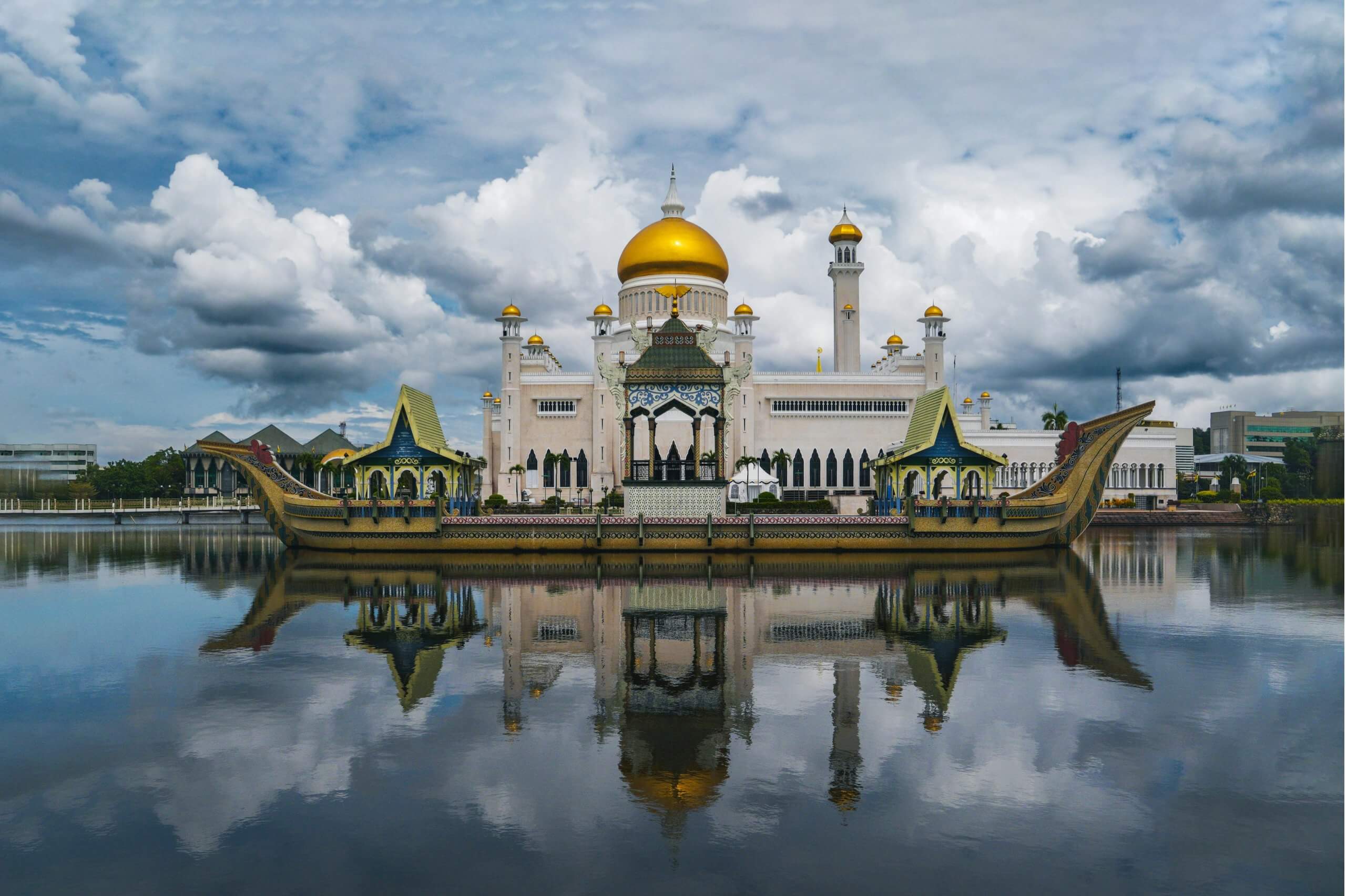
Built on stilts above the Brunei River, Kampong Ayer shows how community life, transport, family networks and commerce were historically organised around water. Brunei’s capital, Bandar Seri Begawan, carries many layers of cultural meaning. It is a modern administrative capital, but it is also a city of mosques, royal institutions, river communities and public spaces that reflect national values. The Sultan Omar Ali Saifuddien Mosque is one of the country’s most iconic cultural landmarks.
Its golden dome, lagoon setting and formal design express Brunei’s Islamic identity and royal symbolism. Another major landmark is the Jame’ Asr Hassanil Bolkiah Mosque, built to honour the current Sultan’s reign. It represents the connection between religion, monarchy and national identity. In Brunei, mosques are not only places of worship; they are also visual symbols of the country’s values, order and spiritual centre.
The monarchy is central to Brunei’s history. Brunei is a sultanate, and the Sultan plays a major role in national life. The country’s political and cultural identity is closely connected to the royal institution. Public ceremonies, official portraits, national events and museums all reflect the importance of the monarchy.
The Royal Regalia Museum helps visitors understand royal ceremonies, national symbols and the historical role of the Sultanate. Brunei’s modern history was also shaped by European influence. The country became a British protectorate in 1888 and remained under British protection for many decades. During this period, Brunei retained its monarchy but experienced political and administrative changes under British influence.
Brunei achieved full independence in 1984 after nearly a century as a protectorate. Oil and natural gas also changed Brunei’s history. Petroleum wealth helped transform the country’s economy, public services and infrastructure. Britannica notes that Brunei’s economy has been strongly dependent on petroleum and natural gas, which helped create one of the higher standards of living in Asia.
This economic foundation shaped modern Brunei, supporting education, healthcare, public facilities and national development. However, Brunei’s identity cannot be reduced to oil wealth. Its culture remains strongly rooted in Malay Islamic monarchy, often described through the national philosophy of Melayu Islam Beraja, meaning Malay Islamic Monarchy. This philosophy emphasises Malay culture, Islamic values and loyalty to the monarchy.
It helps explain why Brunei’s public life is more formal, conservative and tradition-oriented than many other Southeast Asian destinations. Bruneian social customs often emphasise respect, modesty, politeness and community harmony. Visitors may notice a calm public atmosphere, careful dress expectations in religious spaces and a strong respect for elders and authority. Public behaviour tends to be reserved, especially compared with more nightlife-focused destinations in the region.
Language is another important part of Brunei’s culture. Malay is the official language, but Brunei Malay is widely used in everyday conversation. English is also commonly used in education, business and government contexts. Other languages reflect the presence of Chinese communities, Indigenous groups and regional connections.
Brunei’s population includes Malays, Chinese Bruneians and Indigenous communities such as Dusun, Kedayan, Murut, Bisaya and others. This means that while Malay Islamic culture is dominant nationally, Brunei also contains smaller cultural traditions connected to Borneo’s wider ethnic diversity. Food culture reflects this mixture. Bruneian cuisine includes Malay, Chinese, Indigenous and regional influences.
Dishes such as ambuyat, nasi katok, satay, noodles, seafood and rice-based meals are part of everyday food life. Ambuyat, made from sago starch, is especially associated with Brunei and parts of Borneo. Food markets and night markets are important cultural spaces where visitors can see daily life beyond formal landmarks. Traditional arts and crafts also form part of Brunei’s cultural heritage.
Textile traditions, metalwork, weaving, boat-related skills and ceremonial objects connect the country to older Malay and Bornean craft systems. Royal and religious ceremonies often preserve forms of dress, music, etiquette and symbolism that might otherwise fade from daily life. Brunei’s festivals and public holidays also show the relationship between religion, monarchy and community. Islamic holidays such as Hari Raya Aidilfitri are especially important.
National Day, the Sultan’s Birthday and other official events bring together public ceremony, flags, prayers, performances and national pride. The country’s cultural atmosphere is also shaped by its natural environment. Rainforests, rivers and coastal landscapes are not just scenery; they influence settlement, food, transport and identity. The protected forests of Temburong show Brunei’s environmental values and its effort to preserve rainforest heritage.
Brunei’s history is therefore a story of continuity and adaptation. It has moved from early local belief systems to Islamic sultanate, from maritime power to British protectorate, from oil discovery to modern welfare state, and from regional trading society to independent Commonwealth member. Yet through these changes, monarchy, Islam and Malay identity have remained central. Commonwealth Gateway Closing Perspective Brunei Darussalam’s culture and history show how a small Commonwealth country can carry a much larger historical identity.
Its story is shaped by Malay civilisation, Islamic tradition, royal authority, river settlements, British protectorate history and modern oil-supported development. Brunei’s cultural strength lies in continuity: the preservation of monarchy, faith, etiquette, architecture and social order within a changing Southeast Asian region.
For more information, take a look at these local third-party websites: